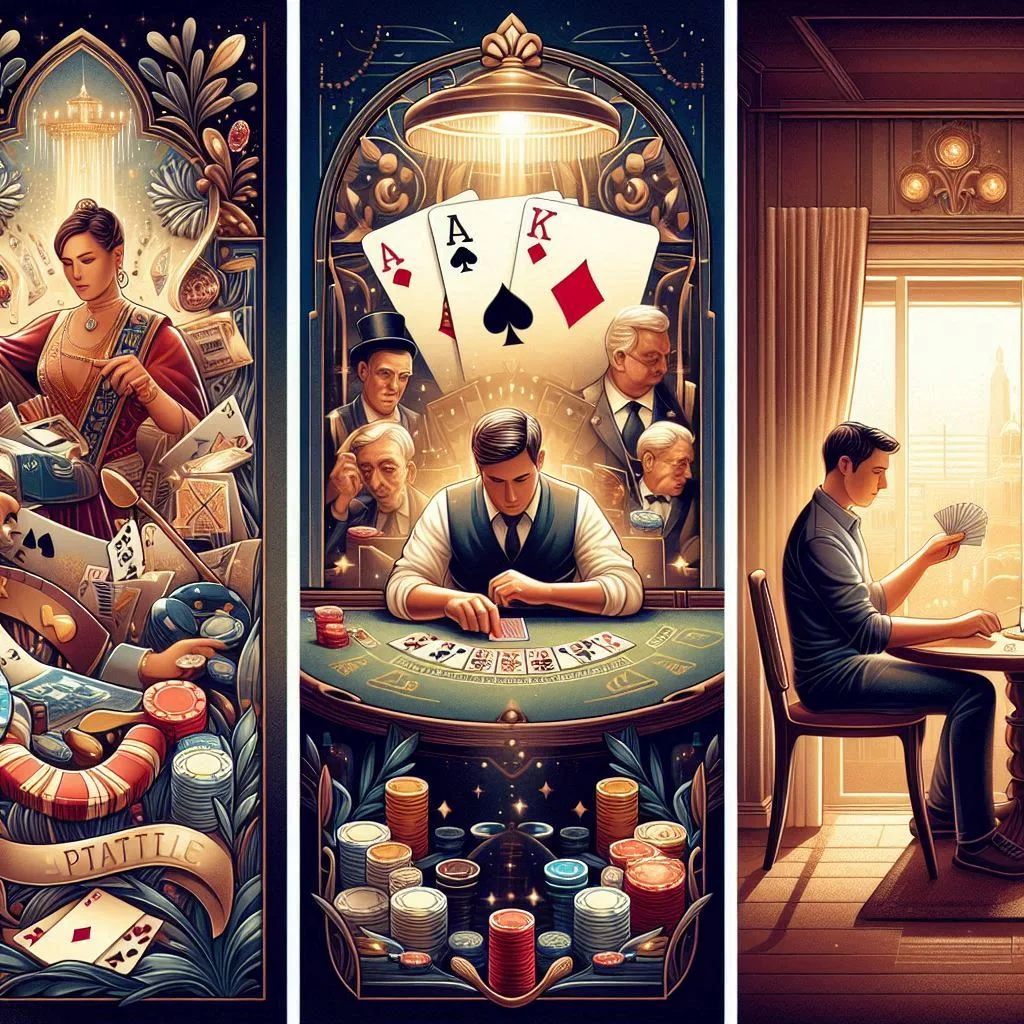

dpcpersagirejanglebong.org – In every standard deck of playing cards, the face cards carry centuries of history, symbolism, and linguistic evolution. The King and Queen are instantly recognizable, their meanings rooted in monarchy and tradition. But the middle face card — the Jack — has a much more unusual and surprisingly complex story. Players often ask: why is the card called Jack? And how did this term evolve into the global word we use today?
To understand the real meaning of Jack in card games, we have to trace the journey of this figure from medieval courts to modern Poker tables, from European linguistic traditions to global card culture. We have to explore how a single card changed identities over time — from a servant, to a trickster, to a game-changing symbol in some of history’s most influential card games.
And along the way, we’ll connect this evolution back to the broader Meaning of card games — how symbols and ranks take on cultural lives of their own, often far beyond the rules printed on the box.
Let’s dive deep.
The Jack Did Not Start as a Jack at All
The most important part of the story is this:
Originally, the Jack was called the Knave.
Yes — the modern Jack began life under a completely different name.
What is a Knave?
In Middle English, knave referred to:
-
a male servant,
-
a young man of modest status,
-
or a trickster/rogue in some contexts.
In medieval European court hierarchy, the Knave ranked below the Queen and King — which mirrors the card’s position today.
For centuries, decks across England and Europe used:
-
K for King
-
Q for Queen
-
Kn for Knave
This worked well… until it didn’t.
Why the Knave Became “Jack”: The Practical Reason
The shift wasn’t originally cultural — it was functional.
Problem: The Knave and King Shared the Same First Letter
When letters were printed in the corners of cards for easier identification, both Knave and King started with K. This made them confusing, especially when cards were fanned in hand.
Players couldn’t easily distinguish:
K = King
K = Knave
Games that relied heavily on quick recognition (like Whist) became frustrating.
Solution: Replace Knave with Jack
By the 19th century, card manufacturers began printing J instead of Kn or K. The name “Jack,” which already existed in English slang to refer to a common young man or servant, was simple, short, and instantly recognizable.
The printing convenience became so widely accepted that by the late 1800s, “Jack” replaced “Knave” entirely.
But Why “Jack”? The Linguistic Story
The word “Jack” was already deeply embedded in English long before it entered card decks.
Jack meant the “everyman”
Historically, Jack was used to describe:
-
the average worker (“a Jack-of-all-trades”)
-
a common man (“Hit the road, Jack!”)
-
a mischievous character (as in tales of Jack the Giant Killer)
-
a servant or attendant
The personality of the Jack was a perfect match for the role originally assigned to the Knave — someone just below royalty, agile, clever, and sometimes unpredictable.
Jack was a humorous, casual nickname
It was easy to say, widely understood, and fun to use. As English culture shifted toward more informal vocabulary in the 1700s and 1800s, “Jack” became the natural replacement.
Jack appears in countless English expressions
-
Jack Frost
-
Jack-in-the-Box
-
Lumberjack
-
Jackrabbit
-
Union Jack
The word was so widespread that it felt natural when it entered card games.
Jack in Early Card Designs
Historically, the Jack was depicted as:
-
a warrior’s page
-
a noble’s servant
-
a youthful court attendant
-
or sometimes a rogue with a sly expression
Many old decks portrayed Jacks holding:
-
swords
-
axes
-
flowers
-
shields
-
spears
These props signaled their role: someone with responsibilities, but not high enough rank to command like a King or Queen.
The Jack as the Trickster in Card Lore
As card culture expanded into gambling houses, taverns, and social clubs, the Jack took on symbolic interpretations.
The Jack became the “wildcard personality.”
He wasn’t the most powerful card — but in certain games, he held surprising influence.
Examples:
-
In Euchre, the Jack of the trump suit (the Right Bower) is the strongest card.
-
In some Rummy variants, Jacks score special bonus points.
-
In Blackjack, the Jack contributes to face-card combinations worth 10.
-
In certain trick-taking games, Jacks can initiate special moves or rule exceptions.
The Jack’s identity evolved from servant to strategic pivot — often unpredictable, sometimes dominant, always interesting.
How the Jack Became Important in Modern Card Culture
Today, the Jack plays a crucial role in many of the world’s most iconic games.
1. In Poker
The Jack is part of powerful hands like:
-
Jacks or Better
-
Straight (10–A)
-
Broadway straight
-
High pairs
Pocket Jacks (JJ) is one of the trickiest hands in Texas Hold’em — strong, but notoriously difficult to play well.
This complexity reinforced the Jack’s identity as the “thinking card.”
2. In Blackjack
Jacks are face cards worth 10, forming:
-
strong opening hands
-
blackjack (A + J)
-
important doubling-down opportunities
Face cards like the Jack shape statistical outcomes in Blackjack strategy charts.
3. In Rummy
In many variants:
-
Jacks are worth 10 points
-
Jacks contribute to sequences and sets
-
Sometimes they function as wild cards
This flexibility makes them valuable but dangerous.
4. In Euchre
The Jack becomes the strongest card in the entire deck when it is:
-
the Jack of the trump suit (Right Bower)
-
the Jack of the same color (Left Bower)
This unique rule is why Euchre decks remove cards below the 9 — the Jack is simply too important to ignore.
Why the Jack Sits Between Queen and 10
The Jack’s position is symbolic and functional.
Symbolically
-
Kings rule the kingdom
-
Queens govern social and political matters
-
Jacks handle the work, carry messages, serve the court
The Jack is literally the bridge between royalty and common ranks.
Functionally
A 10-card straight integrates perfectly with the Jack:
-
8, 9, 10, J, Q, K, A
This sequential flow is central to most card mechanics.
Why Players Connect Emotionally With the Jack
The Jack feels “human.”
He is not too powerful, not too weak, and often requires skill to use effectively.
Players see the Jack as:
-
relatable
-
strategically tricky
-
the underdog
-
the wildcard
-
the symbol of cleverness
This emotional connection doesn’t exist with the more rigid King or Queen.
Jack in Art, Literature, and Symbolism
The figure of the Jack appears throughout Western culture:
Nursery rhymes
-
Jack and Jill
-
Little Jack Horner
Folklore
-
Jack the Giant Killer
-
Jack O’Lantern
Everyday language
-
Jackpot
-
Hijack
-
Lumberjack
-
Jackknife
These associations deepen the card’s cultural identity.
Why the Jack Name Stuck Globally
Even in non-English-speaking countries, the word “Jack” is often kept instead of “Knave.” Why?
1. Simplicity
Short, easy to print, easy to pronounce.
2. Standardization
International card decks converge on consistent symbols and letters:
-
J (Jack)
-
Q (Queen)
-
K (King)
-
A (Ace)
3. Gaming globalization
Poker, Blackjack, and Rummy spread worldwide — all using “J.”
4. Printed corner indices
A single letter beats multi-letter terms.
5. Cultural export of British/American card decks
Especially through casinos and global gaming companies.
The name “Jack” became the default worldwide through cultural momentum.
So, why is the card called Jack?
Because practicality, language evolution, printing clarity, and cultural symbolism all converged to replace the awkward “Knave” with the simple, universal “Jack.”
The meaning of Jack in card games is shaped by:
-
his origins as a servant
-
his evolution into a trickster
-
his strategic importance across games
-
his emotional connection with players
-
his universally recognized ranking
From medieval courts to modern Poker tables, the Jack has transformed from a humble attendant into one of the most dynamic figures in the card world.
A simple name change didn’t just clarify the deck — it reshaped how players interact with one of the most iconic characters in gaming history.